
Korea's wage, productivity gaps widen amid chip-led growth: KDI
Korea Herald
Korea Herald
South Korea's economic rebound has brought little improvement in workers' purchasing power, as weak productivity outside semiconductors holds back wage growth and widens the divide between industries, a state-run think tank said Monday.
The Korea Development Institute said broader productivity gains were needed to translate economic growth into sustained pay increases.
Average wages adjusted for inflation rose just 0.2 percent between 2021 and 2025, compared with a cumulative 24 percent increase between 2011 and 2021.
The weakness persisted this year. Real wages rose 0.3 percent in the first half, while regular pay, excluding overtime and special payments such as bonuses, fell 0.3 percent after inflation.
Industries where average real wages declined employed 53.2 percent of workers in KDI's analysis. Pay gains were concentrated in some higher-paying sectors, with nominal wages in electronics manufacturing, which includes semiconductors, climbing 21.6 percent.
Behind that divide is a widening gap in companies' ability to generate value from labor and capital, according to the report. Semiconductor manufacturing productivity rose an average of 8.5 percent a year between 2021 and 2025. Outside the sector, it fell 0.4 percent annually.
KDI used financial statements from companies subject to external audits to measure revenue-based productivity. The measure reflects technology, demand, selling prices and competitive conditions, helping gauge companies' capacity to raise pay.
The slowdown extended to more productive firms outside chips. The productivity index for the top third of nonchip companies rose just 0.8 percent over the period, while the middle and bottom thirds posted declines of 2.5 percent and 9.7 percent, respectively.
KDI estimated that differences in productivity growth explained roughly a third of the 9-percentage-point gap in real regular pay growth between electronics manufacturing and other industries during 2021-25.
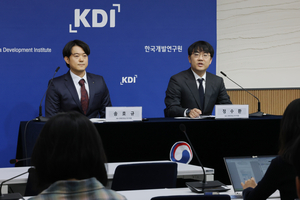
In a briefing Monday, Chung Su-hwan, a research fellow in KDI's economic forecasting division, said that the chip industry's small share of employment limited the impact of its pay gains on the overall average.
"It remains somewhat uncertain whether wage increases in semiconductors will directly translate into increases in other industries," he said.
Weak productivity has also accompanied mounting financial strain. Outside semiconductors, firms whose operating profits failed to cover interest expenses for three consecutive years accounted for 6.2 percent of value added in 2025, up from 3.2 percent in 2021.
Among industries in the bottom third by productivity growth, that share rose an average of 7 percentage points. KDI attributed 6.6 percentage points of the increase to productivity factors.
Extending loan maturities or subsidizing interest costs alone would have limited scope to address those problems, KDI said.
The institute urged existing industries to differentiate their products and move into higher value-added production. It also called for removing barriers that prevent new businesses from entering markets and expanding.
Restructuring should address the pressures facing individual industries, it said, citing Chinese oversupply in petrochemicals, weaker demand and rising costs in construction, as well as competition from streaming platforms in broadcasting and video.
"We need to support job transitions and retraining so workers can move to more productive workplaces," said Song Ho-kyu, a research fellow and co-author of the report, adding that industries also need to improve productivity through greater efficiency, higher value-added production and cost reductions.
AI Summary
South Korea's economic rebound has not translated into meaningful wage growth because weak productivity outside semiconductors holds back pay increases, the Korea Development Institute said. Real wages rose just 0.2 percent between 2021 and 2025, compared with a 24 percent cumulative increase between 2011 and 2021, while semiconductor productivity grew 8.5 percent annually and nonchip productivity fell 0.4 percent annually.
Sentiment analysis
AI insights
low
1d ago
general
Financial analysis
Relevance
medium
Market sensitivity
medium
Affected sectors
Affected assets
Follow this story on TV
Live charts and AI commentary on one screen with Trade on tv.